US Secretary of State Mike Pompeo has labeled the Chinese Communist Party “the central threat of our times,” two weeks after President Donald Trump signed the “biggest deal there is” with Beijing.
Speaking at a conference with UK Foreign Secretary Dominic Raab in London on Thursday, Pompeo stated that “while we still have to be enormously vigilant about terror… challenges all across the world… the Chinese Communist Party presents the central threat of our times.” The State Secretary then outlined the multiple avenues the US is taking to counter China’s growing influence – right after he admitted that there’s “huge opportunity” for business there.
“…Whether it’s at the World Trade Organization, or whether it’s in how we handle infrastructure and technology, or it’s how we ensure we have the military capabilities…we have to collectively, the West, ensure that the next century is governed by these Western democratic principles.”
Pompeo’s declaration is a starker one than President Trump’s hot and cold statements on Beijing. While the president has overseen a two-year trade war with China, and has accused the country of currency manipulation, stealing intellectual property, and interfering in elections, he has also hailed a recently-signed trade deal with Beijing, and described Chinese President Xi Jinping as a man who “truly loves his country.”
As Trump plays politics with Xi, the consensus in Washington toward China has hardened. The Pentagon created a new job posting in June, aimed squarely at developing ways to oppose China’s rise. The man who took it, Chad Sbragia, said in November that “strategic competition with China really is the defining challenge of our generation.”
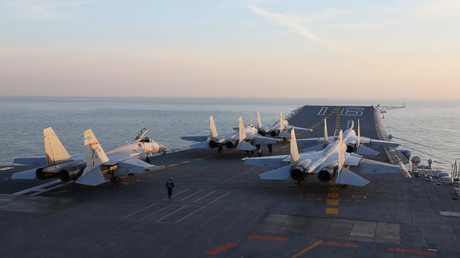
That’s on top of Defense Secretary Mark Esper calling for more US bases in the Pacific region to challenge China’s maritime power, and referring to the Indo-Pacific as “our priority theater.” Esper’s acting predecessor, Mark Shanahan, reportedly told the Pentagon’s leaders that Washington’s priority had shifted away from the global war on terror to “China, China, China.”
The new anti-China consensus is enshrined in official Pentagon policy too. The Department of Defense’s 2018 National Defense Strategy (NDA) described China as “predatory,” and a “strategic competitor” requiring “increased and sustained investment.”
China, for its part, has consistently rejected the US’ protestations. Beijing accused the US of “interference” for passing a military funding bill late last year that included a reference to “long-term strategic competition” with China, and provided military support for Taiwan. China’s Defense Ministry blamed American officials for exaggerating the conflict between the two countries, and accused the leaders in Washington of harboring a “Cold War mentality.”
Think your friends would be interested? Share this story!