Iran fired a slew of missiles at US bases in Iraq, fulfilling its promise to avenge the death of its top general. Will both sides stop where they are, or are we witnessing the calm before an all-out storm?
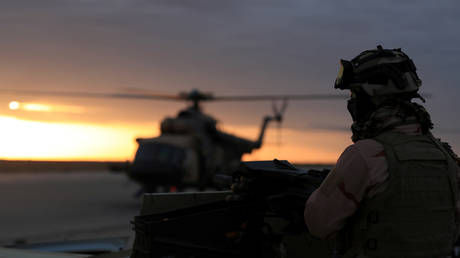
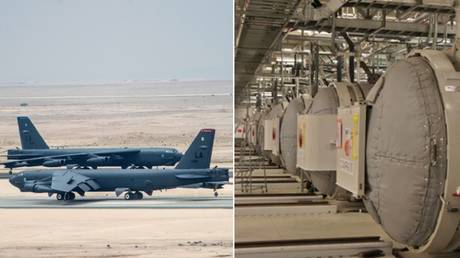
Two waves of Iranian missiles rained down overnight on two military installations housing US and coalition troops, one in Al-Asad and one in Irbil. The strikes were heavy on symbolism, with Iranian leadership making sure that the US gets the message right.
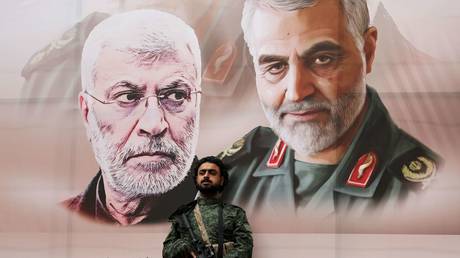
Supreme Leader Ayatollah Ali Khamenei said the attack – codenamed ‘Martyr Soleimani’ after the slain commander of Iran’s clandestine Quds Force – was “a slap in the face” for the US. Echoing his words, President Hassan Rouhani said Tehran’s “final answer” to Soleimani’s killing aims to “kick all US forces out of the region.”
Washington has been conspicuously mute in the aftermath of the missile attack. While Donald Trump optimistically wrote that all was “well” by Wednesday morning, there was no mutual exchange of threats, unlike earlier this week.
As the world braces itself for things to come, RT reached out to some international pundits who revealed noteworthy details about the strikes and tried to foresee what the future holds.
Why Iraq?
One of the targets for the attack was an airbase visited by both President Trump and Vice President Mike Pence, “so it has this kind of symbolism,” Middle East-based journalist and writer Ali Rizk told RT.
BIG Number two, Soleimani himself was assassinated in Iraq, so it’s only natural therefore that the first response [would be] focused on Iraqi territory. It’s [of] double significance.
Iran has “numerous allies in Iraq,” which represents “the easiest place” to carry out a retaliatory strike and “make life difficult for the Americans.”
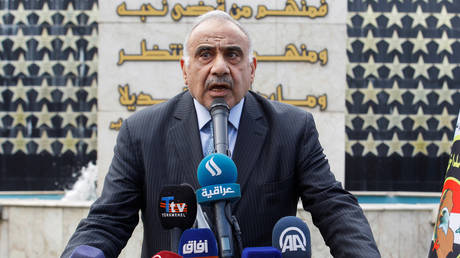
Notably enough, Baghdad didn’t protest against the strikes, with Prime Minister Adil Abdul Mahdi revealing that he received a verbal message from Iran warning of their response to the assassination of Soleimani, reassuring that it would be restricted to US military deployed in Iraq.
What lies in store for the US?
Operation ‘Martyr Soleimani’ made headlines in international media, but it’s unclear up to the time of writing if it inflicted any losses on US and Western forces. The bases in question were already put on alert, as was all other American facilities across Iraq.
“The ball is in the US’ lap right now. It can lick its wounds and end this, or it can retaliate, in which case there will be tit-for-tat spiraling out of control into an all-out war, which is not in the interests of Iran or the United States, or anybody else in the region,” Kaveh Afrasiabi, a US-based academic who advised Iranian negotiators during previous nuclear talks, told RT.
US-Iran relations are at a “very critical threshold,” Afrasiabi added. Trump, who vowed to make a statement on Thursday morning, now faces “important decisions” which could shape the Middle East for years to come.
Some hardliners, including Senator Lindsey Graham, called Iran’s revenge “an act of war,” while Senator Marco Rubio called on Americans to “respond appropriately.” This risks ratcheting up the conflict with Iran, the analyst noted.
If he caves into his warmongering side and listens to those voices of arrogance and ignorance… then we will see the tragic result in terms of an all-out war.
Dan Kovalik, peace activist and labor attorney, was much more pessimistic, suggesting the Soleimani assassination was actually an attempt to force Iran into making first shots of war.
“Truthfully, I believe that the murder of General Soleimani was done in order to provoke this type of response [from Iran]. The people in charge of the US government at this point want a war with Iran, and they were looking to create a provocation,” he argued.
Surely no US president would willingly start a war, right?
What to expect from Iran?
The attacks were “carefully calibrated” to avoid major escalation in the aftermath, suggested Sreeram Chaulia, a professor and dean at India’s Jindal School of International Affairs.
Iranians don’t want the kind of confrontation in which the US troops will stay in the region indefinitely, thus putting pressure on Iran’s security. They believe they can outperform the Americans in the long run, Chaulia explained.
“The idea is that, eventually, they can run out of clock and the Americans will leave,” he said, referring to a Pentagon leak saying it was ready to reposition their forces and withdraw from Iraq. At the moment, Tehran is holding back “because one, they don’t want war as they clearly said, but two, they take smaller actions of this sort continuously.”
Top Iranian officials called the attack “a proportionate response” to Soleimani’s assassination, but in the meantime, they signaled that any coercive action will be met with force.